
Grain-Free Dog Food and DCM: What the FDA Has Said
Grain-free dog food and DCM: what the FDA's investigation found, the 1,382 reports to 2022, what it has not said, and how to read a bag for peas and lentils.
Affiliate disclosure: product links on this page go to Amazon or to the maker's own store. As an Amazon Associate we earn from qualifying purchases, at no extra cost to you; links to makers' own stores earn us nothing. No retailer or brand sees our picks before they are published or has any say in them. How we choose.
The FDA has not found that grain-free dog food causes heart disease, and it has not asked for any food to be recalled. What it found, after reports of dilated cardiomyopathy (DCM) in dogs began arriving in 2018, is a pattern: most of the reported diets had peas, lentils or other pulses high in their ingredient lists, and more than 90 percent of them were labeled grain-free.
The agency received 1,382 reports of DCM in dogs between January 2014 and November 1, 2022, and said in December 2022 that it would not release further public updates until there was meaningful new science to share. This page sets out what the FDA's investigation page and its question and answer page say, what they do not say, and what that means when you are choosing a food.
What DCM is, and why diet came into it
The FDA describes DCM as a disease of the heart muscle that leaves the heart enlarged; as the chambers stretch, the heart pumps less well and can fail. Historically DCM was seen mostly as a genetic disease of large and giant breeds such as the Doberman Pinscher, Great Dane and Irish Wolfhound, and in Cocker Spaniels with taurine deficiency.
In July 2018 the FDA announced it was looking into reports of DCM in dogs eating certain pet foods, many labeled grain-free, whose main ingredients included a high proportion of peas, lentils, other legume seeds (pulses) or potatoes. The agency defined "main ingredients" as those within the first 10 on the list, ahead of the vitamins and minerals. Many of the reports involved breeds not previously known to be prone to the disease.
What the FDA's numbers show
The FDA's question and answer page gives the count of DCM reports in dogs submitted up to November 1, 2022, broken into the periods between its public updates. The agency notes that the counts include every report in which a dog was simply stated to have DCM, whether or not records confirmed it.
| Period | Reports |
|---|---|
| Jan 1, 2014 to Nov 30, 2018 | 329 |
| Dec 1, 2018 to Apr 30, 2019 | 190 |
| May 1, 2019 to Jul 31, 2020 | 608 |
| Aug 1, 2020 to Nov 1, 2022 | 255 |
| Total | 1,382 |
The FDA warns that report numbers rise after each public update and that, without a disease tracking system for pets like the one the CDC runs for people, it cannot say how common non-hereditary DCM is. Its 2019 report put the scale in context with an AVMA estimate of 77 million pet dogs in the US and the note that "Most dogs in the U.S. have been eating pet food without apparently developing DCM."
When the FDA examined the labels of the reported foods in 2019, more than 90 percent were grain-free and 93 percent contained peas and/or lentils; a far smaller share contained potatoes. No single animal protein stood out: chicken, lamb and fish were the most common, with some kangaroo, bison and duck.
What the FDA has not said
Three statements on the question and answer page matter as much as the numbers. First, the FDA says it has received reports of non-hereditary DCM with both grain-free and grain-containing diets, and that soy, though a legume, showed no signal. Second, it says legumes and pulses "have been used in pet foods for many years, with no evidence to indicate they are inherently dangerous", but are used in many grain-free diets in greater proportion than in most grain-containing foods.
Third, on recalls: "FDA has no definitive information indicating that the diets are inherently unsafe and need to be removed from the market". The agency also stopped updating its list of the brands most often named in reports, because several companies had changed their formulas since its first announcements. It now describes non-hereditary DCM as a complex condition that may involve genetics, underlying medical conditions and diet together.
Taurine
Taurine came up early because a lack of it causes DCM in cats and in some Cocker Spaniels. The FDA's 2019 report says taurine is generally not considered essential for dogs, which make it from cysteine and methionine, and that nearly all the grain-free products it tested had methionine-cystine above AAFCO's 0.65 percent minimum for adult dog food. It also notes research suggesting Golden Retrievers may be genetically prone to taurine deficiency, and suggests owners who are worried ask their vet about checking taurine levels or an echocardiogram.
Signs to take to a vet
The FDA lists the signs that should send a dog to the vet as soon as possible: decreased energy, cough, difficulty breathing and episodes of collapse. Your vet may ask for a full diet history, including treats, so keep the bags or photos of the labels. The agency also reports that veterinary cardiologists have seen improvement in non-hereditary DCM cases with treatment and a change of diet when the disease is caught early.
Choosing a food with this in mind
The FDA's consistent advice is to work with your veterinarian, who may consult a board-certified veterinary nutritionist, before changing a dog's diet. The MSD Veterinary Manual makes a related point in general terms: nutritional problems are most likely with unbalanced homemade diets and with diets, such as grain-free ones, that use ingredients not commonly found in pet food or in higher amounts than had previously been shown to work. That last sentence is MSD's, not a finding about any brand.
If you want a food outside the pattern the FDA described, the label tells you what you need. Look at the first 10 ingredients for peas, lentils, chickpeas, beans or potatoes, and check the nutritional adequacy statement and the maker's answers to WSAVA's questions about who formulates the food; our label guide walks through both.
| Check | Where | Why it matters here |
|---|---|---|
| Pulses or potatoes in the first 10 ingredients | Ingredient list | The pattern the FDA described in reported diets |
| Grain-free claim | Front panel | More than 90 percent of reported diets carried it, though grain-containing diets were reported too |
| Complete and balanced statement | Back or side panel | Confirms the food meets an AAFCO profile or passed a feeding trial |
| Who formulates the food | Maker's site or customer line | WSAVA asks whether the maker employs a qualified nutritionist |
Our best dry dog food and sensitive stomach food guides note which picks are grain-inclusive, and the food allergy guide explains why grain is rarely the culprit behind an itchy dog.
Frequently asked questions
Does grain-free dog food cause heart problems?
The FDA has not found that it does. It found that most dogs reported with non-hereditary DCM ate foods with peas, lentils or other pulses high on the ingredient list, more than 90 percent of them labeled grain-free, and it continues to describe the cause as complex and unknown.
Has the FDA recalled grain-free dog food?
No. The FDA says it has no definitive information that the diets are inherently unsafe and need to be removed from the market, and it has not requested recalls over DCM.
How many dogs got DCM from grain-free food?
The FDA counted 1,382 reports of DCM in dogs from January 2014 to November 1, 2022, including reports it could not verify. Reports are voluntary, so the figure does not show how common the disease is or prove a cause.
Is the FDA still investigating grain-free food and DCM?
In December 2022 the FDA said it did not intend to release further public updates until there is meaningful new scientific information. It still accepts reports and encourages research.
Should I switch my dog off grain-free food?
The FDA's advice is to talk to your veterinarian, who may consult a board-certified veterinary nutritionist, before making a diet change. Bring the food's label and your dog's full diet history.
Do dogs need taurine in their food?
The FDA says taurine is generally not essential for dogs because they make it from methionine and cysteine. Golden Retrievers may be prone to taurine deficiency, and a vet can test taurine levels.
Sources
- FDA Investigation into Potential Link between Certain Diets and Canine Dilated Cardiomyopathy, U.S. Food and Drug Administration
- Questions & Answers: FDA's Work on Potential Causes of Non-Hereditary DCM in Dogs, U.S. Food and Drug Administration
- Nutritional Requirements of Small Animals, MSD Veterinary Manual
- Guidelines on Selecting Pet Foods (updated March 2021), World Small Animal Veterinary Association Global Nutrition Committee
- Reading Labels, Association of American Feed Control Officials
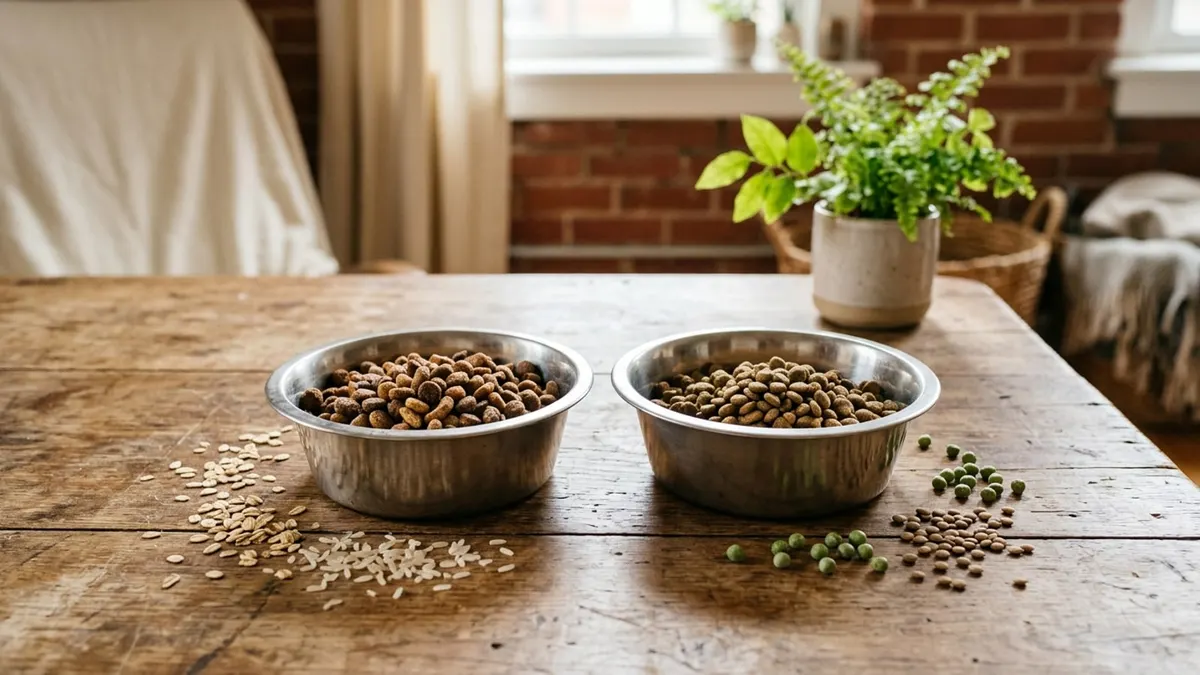
Cover image: Illustration: Dog Supply Review
Related guides

Best Dog Food for Picky Eaters (2026): Complete Wet Foods and One Topper
A picky dog usually does best on a complete wet food rather than a bowl of kibble buried in extras. Purina Pro Plan's classic pate leads; Wellness Simply Shreds is the topper.

Best Dog Food for Sensitive Stomachs (2026): Four Foods and the Vet Check First
Purina Pro Plan Sensitive Skin & Stomach Salmon & Rice leads, without corn, wheat or soy. But vomiting and diarrhea have many causes, and a vet visit comes before a food change.
Best Dry Dog Food of 2026: Four Adult Kibbles Read Past the Bag
Hill's Science Diet Adult Chicken & Barley leads because Hill's prints everything a buyer needs: a feeding-trial statement, calories per cup and the full nutrient profile.